Toronto Personal Trainer: The Effects of Stress
By admin | August 7, 2008
When we discuss stress, it can be easily classified as a “Disease of the Modern World”. A disease is defined as an “impairment of the normal state or functioning of the body as a whole or of any of its parts” Columbia Encyclopedia, Sixth Edition, Copyright (c) 2005. Stress, as a disease, impairs out biomechanical functions by increasing our nutrient needs, increasing excretion and altering the use of certain nutrients leading to a lack in daily energy. Stress also produces high levels of cortisol that has multiple destructive effects on the body from blood clotting to insulin resistance. Some studies show that stress can actually shorten your life. Scientists demonstrated a correlation between perceived stress and objective stress on cellular aging. The premature aging study (Proceedings of the National Academy of Sciences, online November 29, 2004) compared the relative lengths of telomeres (a chromosomal cap the shortening of which is related to the aging process), telomerase and oxidative stress in women giving care to children with chronic illness and a control group of women caring for healthy children. The women who experienced more stress in their lives (by having an ailing child) had shortened telomeres, lower telomerase activity and greater oxidative stress then the less-stressed women. The changes in the stressed women indicated accelerated aging and likely increase risk of age-related diseases.
If we needed yet another reason to try to relax, these studies indicate that stress can seriously damage your body. So next time you feel stress building take a moment to focus inward and concentrate on your breathing. A simple form of meditation to combat stress is to inhale and exhale to a steady five counts. As you feel more relaxed, increase the length of the exhale. This simple exercise relaxes your body and mind while lowering the heart rate.
Check back for part two of this post on STRESS AND NUTRITION.
Topics: Healthy Tips | No Comments »
Prenatal yoga and fitness
By admin | July 30, 2008
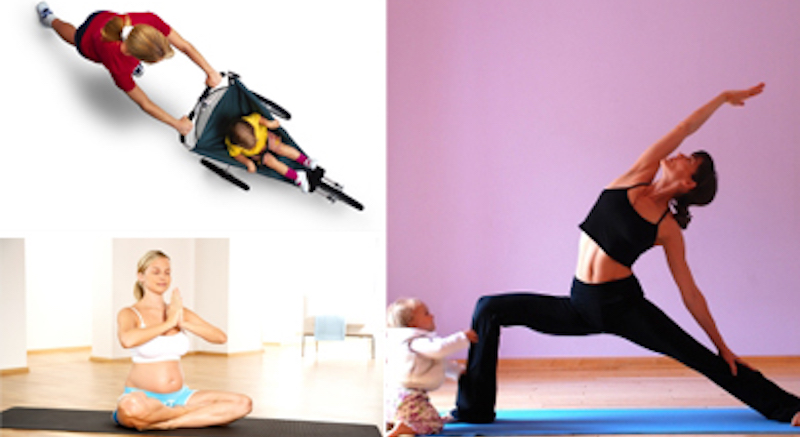
Pregnancy is a time of great change in a woman’s body. It is especially important during this time to prepare your body for the upcoming birth of your child by keeping active, practicing proper breathing techniques and developing strength in the pelvic girdle muscles.
Yoga and Strength Training are two great ways to prepare your body for pregnancy and birth.
Benefits of Prenatal Yoga:
1) Learn proper breathing techniques to ease stress and labour pains
2) Increase you flexibility in the joints that need to be open for labour while decreasing lower back and neck pain.
3) Sleep better. Yoga can have a relaxation effect on the body, easing you into a better night’s sleep
4) Educate yourself. Join a prenatal yoga class run by a doula and get advice on the realities of pregancy and labour while sharing your experiences with other expectant moms.
FOR A GREAT PRENATAL YOGA CLASS RUN BY A EXPERIENCED DOULA TRY http://www.sasmitayoga.com
Benefits of strength training during pregnancy:
1) Develop more core strength and strengthen your pelvic girdle to help make labour easier
2) Raise you metabolism so that you gain weight at a healthy pace. While performing cardio exercises raises your metabolism in the short term, strength training raises your overall metabolism so that your body works more efficiently 24 hours a day.
3) Decrease your chance of injury and discomfort during pregnancy. As the hormone relaxin kicks in your joints become looser. Strength training helps to keep a balance between strength and flexibility in the body and makes it less likely that you will injure yourself.
4) Increase your self image. As you belly expands, you can feel stronger and more confident knowing that you are do an activity that is making your body healthier.
5) Get back in shape quicker post baby. Women who exercise pre and during pregnancy reach their pre-pregnancy weight quicker because their bodies are healthier.
FOR MORE INFORMATION ON PRIVATE PRENATAL STRENGTH TRAINING call Lauren at 647-294-5155 or email me at lauren@torontopersonaltrainer.net
Topics: Pre/Post Natal Training | No Comments »
Toronto Personal Trainer: Preventing and Treating Carpal Tunnel Syndrome
By admin | June 23, 2008
PREVENTING AND TREATING CARPAL TUNNEL
SYNDROME
What is it?
Carpal tunnel syndrome occurs when the median nerve which runs from the forearm into the hand becomes pressed or squeezed.
What are the symptoms?
The symptoms include; pain through the wrist and hand, and numbness through the fingers.
How to prevent carpal tunnel syndrome:
Try to keep the wrist in a neutral position. What this means is keeping a straight arm from the fingertips to the elbow maintaining relaxed fingers and shoulders. You can place a small rolled up towel under your wrist so that the wrist can relax and does not bend. There are also ergonomically designed keyboards and wrist rests that reduce the computer users’ risk of injury
Stretches for preventing Carpal Tunnel Syndrome:
Whenever you stop typing, stretch the finger tips towards the under side of the wrist and then release to neutral. Another good stretch is to spread the fingers as far apart as they go and then relax the fingers together. Repeat each stretch ten times.
If you have any questions, feel free to contact me at Lauren@torontopersonaltrainer.net.
Topics: Healthy Tips, Office Health | No Comments »
Toronto Personal Trainer: Fitness Knowledge Quiz
By admin | June 22, 2008
Try your brain at this fun fitness quiz. Answers are below.
1) BMI (Body Mass Index) is
a. an estimate of body composition that compares weight and height
b. a calculation of the percentage of body fat within an individual
c. an individual’s percentage of muscle tissue
2) Which is not a primary benefit of Resistance (weight) training?
a. an increase in bone density
b. an increase in muscle fibre size
c. increased blood delivery
3) Our primary source of fuel when we exercise is…
a. carbohydrates
b. fat
c. vitamins
4) A healthy resting heart rate is…
a. 70-75 bpm
b. 90-100 bpm
c. 110-120 bpm
5) Flexibility training is important because…
a. it helps reduce stress in the exercising muscles and release tension developed in the workout
b. it decreases your chance of developing osteoporosis
c. it develops cardiovascular strength
6) Which statement is false
a. Women in their third trimester should avoid exercises where they are on their backs for a prolonged period of time.
b. Women who exercise while pregnant have higher rates of miscarriages.
c. Exercising while pregnant can help prevent gestational diabetes
7) Which statement is false: Individuals with osteoporosis should …
a. perform strength training 2-3 times a week and balance training once a week
b. do 30 minutes of physical activity each day
c. avoid all resistance training
Which statement is true?
a. genetics accounts for 80% of how fat you are.
b. Women should avoid weights because they may bulk up
c. Cardiovascular training lowers blood pressure
9) To determine maximum heart rate, calculate
a. Resting heart rate plus 50
b. 220-age
c. Resting heart rate times 2
10) When exercising for a cardiovascular benefit, your heart rate should be…
a. 60-85% of your maximum
b. 45% of maximum
c. 20% of maximum
answers: 1.a, 2.c, 3.a, 4.a, 5.a, 6.b, 7.c, 8.c, 9.b, 10.a
Got a question? Email me at lauren@torontopersonaltrainer.net
Topics: Uncategorized | No Comments »
Toronto Personal Trainer Office Fitness: Correct Seated Posture
By admin | June 20, 2008
Sitting Upright not right way to prevent back pain: studies show
A 135-degree body-to-thigh sitting posture was demonstrated to be the best biomechanical sitting position, as opposed to a 90-degree posture most people consider normal (Dr. Waseem Amir Bashir, researcher from University of Alberta Hospital)
85% of us will experience back pain during our lifetime. Office workers are especially prone to back pain and work related injury considering they work seated in front of a computer for the majority of the work day. Traditional thought says individuals should sit upright at their desk to prevent joint and back pain. However, recent studies show that the erect sitting posture is NOT a relaxed or sustainable way of sitting while reclined sitting is. Sitting completely upright creates vertical strain on the spine and forces the spinal material to shift out of line over time. In contrast, when a worker reclines at approximately 135 degrees maintaining lumbar curvature, there is the least strain on the spinal discs and surrounding muscles and joints. Erect posture is only sustainable for two minutes without discomfort. When you consider most office workers are seated for eight hours a day, the less stressful, reclined posture seem an optimal alternative.
So lean back and relax while at your desk and you are on your way to creating a healthy spine and preventing injury.


Topics: Healthy Tips, Office Health | 1 Comment »
Video - Stability Ball Exercises
By admin | June 11, 2008
Some example core training exercises.
Topics: Video | No Comments »
Office Workouts - Don’t Let Sitting At A Desk Stop You From Being Healthy
By admin | June 10, 2008
Just following these simple exercises everyday can prevent many injuries caused by sitting in an office chair for prolonged amounts of time.
Topics: Office Health | 2 Comments »
STRETCHING TIPS
By admin | June 10, 2008
Stretching is a great way to prepare for your workout, increase flexibility, prevent injury and relax post-workout. Stretching can be practiced everyday. Try to hold each stretch for a minute or longer.
1. DRESS COMFORTABLY - Wear clothes that you can move in easily and do not limit your range of motion. Breathable cotton is preferable to synthetic cloth.
2. STRETCH SLOWLY - Move slowly in and out of stretches. Do not bounce in the stretch because this can actually signal the muscle to contract and defeat the purpose of the relaxation element to stretching. Focus on relaxing the body part you are stretching. Close your eyes if you like and remember to breathe evenly and slowly.
3. PRACTICE ABDOMINAL BREATHING - Learn to breathe from your diaphragm, so that your stomach expands with the breath instead of your rib cage and shoulders. Try to keep the length of the inhale and exhale even. Use the inhale to lengthen the muscle being stretched and the exhale to further relax it. Abdominal breathing encourages relaxation, lessens muscle tension and helps lower blood pressure.
4. LEARN YOUR “STRETCHING ZONE” - Work within your own stretching limitations. Stretch gradually to the point that you feel a resistance in the muscle but never to the point that you feel sharp pain.
5. EMPTY STOMACHS MAKE STRETCHING EASIER - Stretching will be easier and more pleasant if it is done on an empty stomach.
6. PRE- AND POST-WORKOUT STRETCHES - Never start right into a static stretch at the beginning of your workout without having warmed up the body through light movement (ie. Walking, jogging, range of motion activity). Dynamic stretching (light moving stretches) are best pre-workout when the muscles are not yet fully warmed up. Stretching post-workout is very important. Muscles tend to tighten up post-exertion and stretching after a workout promotes circulation and minimizes muscle stiffness from lactic acid build-up. If you don’t have time to stretch all your muscles post workout, make sure you stretch those you work during your workout.
Topics: Uncategorized | No Comments »
8 FITNESS FACTS
By admin | June 10, 2008
- Drink more water. Drink ½ a litre of water pre-work and post-workout.
- Eat more protein. Protein is the building blocks for muscles. The best sources for protein are tuna, chicken and tofu. A shake made of protein powder, yogurt, fruit and milk or soy milk is a great pre-workout energy boost.
- Eating 5-6 smaller meals throughout the day is better then 3. Eating more often keeps the blood sugar stabilized and stops the body from going into starvation mode.
- Always be conscious of your posture. You can build your core stabilizer muscles just by maintaining good posture throughout the day. Shoulders should be down and back, belly button is pulled in, chest is open and relaxed, neck is long, buttocks relaxed and the natural curve in your lower back is maintained.
- Always take 1-2 days off between resistance training sessions. Your body builds muscel mass the day after your workout. If you train the same muscle groups two days in a row, you can actually damage your muscle tissue.
- Concentration is key during a workout. Studies have shown that people who focus on the specific muscles they are training actually gain more muscle mass then those who are simply performing the exercise.
- Breathing is very important. Muscles use oxygen as a fuel so it is important not to cut off your energy flow by holding your breath. Proper breathing techniques include exhaling on the contraction and inhaling on the release.
- Try to work larger muscles first. For example, work the shoulders and back before the triceps. Smaller muscles often act as stabilizers and assist in larger muscle group exercises so you do not want to exhaust them too soon.
Topics: Healthy Tips | 1 Comment »
Eat Healthy Food on a Budget Tips
By admin | June 10, 2008
Natalie made a great video on YouTube that share some fantastic tips on how to eat healthy on a budget. Save money and eat healthy foods as the same time. Natalie gives ways eat better without breaking the bank. Tips to eat better for less. A healthy diet will increase health, weight loss, wellness and fitness.
Thanks Natalie for the great content!
Please visit Natalie’s website at
http://www.nutritionbynatalie.com
Topics: Nutrition | No Comments »
How Burn More Calories With Interval Cardio
By admin | June 10, 2008
If you are going to the gym to do your cardiovascular training, try this…Don’t go on the treadmill or elliptical for one hour, instead work a shorter period of time at a higher intensity. This saves time and you may actually gain more cardiovascular and calorie burning benefits. If you are comfortable with using a random or interval training program instead of a manual program you should do so.
Why?
Well, studies have shown that you can burn more calories in the same period of time with a program that changes intensity rather then one that stays at the same level. The reason: Our bodies adapt quickly to exercise. If you are working at the same level for a long period of time your body eventually becomes more efficient at conserving energy loss (burns less calories). With a program that constantly changes intensity, your body has no time to adjust to conserve calorie loss and therefore burns more calories overtime. So cut those hour workouts in half and see more results!!
Topics: Cardio | No Comments »
TEN SIMPLE RULES FOR NUTRITION
By admin | June 10, 2008
- Eat foods that are as natural as possible: whole-grain and unprocessed.
- Eat some raw or “living” foods. Vegetables lose some vitamins and minerals when they are cooked.
- Eat food that is as “poison-free” as possible. Chemicals in your food, water and air can build up in your body and harm your health.
- Choose a lower fat diet. Not all fat is bad, just avoid trans-fats and saturated fats and instead choose products with monounsaturated or polyunsaturated fats; such as, olive oil.
- Don’t take mega doses of vitamins and minerals. Certain vitamins and minerals interfere with the absorption of other nutrients in the body. Supplement your diet wisely under the consultation of a health practitioner.
- Drink plenty of water!
- Relax during and after eating.
- Try to stop eating before you are completely full. It takes twenty minutes for your body to register that it is full so if you eat too fast you are likely to overeat.
- Eat breakfast! Your body has been fasting all night and breakfast gives you the energy you need to start the day.
- Finally, don’t be too rigid, whatever your diet. Use the 80/20 rule: eat healthy 80% of the time and whatever you want 20% of the time.
Topics: Nutrition | No Comments »
Wedding SOS
By admin | June 10, 2008
Worried about not fitting into that beautiful wedding dress?
Get in shape for your special day!
I will cater a program to tone up those arms for that strapless dress, shape the abdominals for the honeymoon beach and keep that booty dress ready while improving your cardiovascular health and overall strength.
Exercising before your wedding also can help decrease stress and keep your energy up during this exciting but stressful time.
Topics: Lose Weight | No Comments »
Cardio Dance Classes
By admin | June 10, 2008
Cardio Dance classes: We begin our class with a warm-up section involving modern dance and ballet movements to lengthen the muscles in preparation for the workout. Next we get the heart pumping using latin, hip hop and jazz aerobic combos. A core conditioning segment at the end will keep the abdominals strong. These classes are so much fun that you will forget they are supposed to be a workout!
Topics: Cardio | No Comments »
Senior Fit
By admin | June 10, 2008
SeniorFit: These classes and programs cater to the older adult population. Maintaining bone density and flexibility is essential to the aging process.
SeniorFit involves a combination of resistance training, core strengthening and cardio to allow the older adult improve their muscle strength, flexibility and cardiovascular health while raising their energy level and preventing injury. These classes are safe for those individuals with osteoporosis.
Topics: SeniorFit | No Comments »
Pre/Post Natal Training
By admin | June 10, 2008
Pre/postnatal program exercises help to strengthen the muscles used during labour; as well as, strengthen the upper body to make carrying and caring for your new baby easier.
The cardio segment helps to strengthen the vessels of the heart and increase oxygen flow while keeping the participant at a healthy weight. Gentle stretches are used to relieve pain, increase relaxation and prevent injury. Exercise during pregnancy has many benefits. These programs cater to moms of all fitness levels.
Topics: Pre/Post Natal Training | No Comments »
Core Training
By admin | June 10, 2008
Core training is an essential part to any exercise program. The core includes the muscles of the hip, abdominals and back. These muscles make up the powerhouse of the body and are essential for all types of movements, balancing and injury prevention.
Core training involves training the body from the inside out resulting in better posture. Many of us have picked up bad postural habits through our work and daily activities.
With core training, functional exercises are used to re-educate the body system so that the muscles and joints function in harmony. Functional exercises are movement patterns that mimic natural movement and involve multiple muscle groups.
Core training classes involve an extending warm up and stretch at the beginning to balance out the posture followed by multiple muscle group exercises and ending with floor work. These classes can be done without any equipment using the participants own body weight or with the use of bands, weights or stability balls
READY TO RELEASE THE LEANER STRONGER BODY INSIDE YOU!
CALL OR EMAIL ME TODAY
Topics: Core Training | No Comments »